HEALTHY RECIPES FOR A BETTER LIFE



Does Strength Training Really Work? What the Largest Study in the World Reveals in 2026
Does strength training really work? Discover what the 2026 ACSM study reveals about muscle growth, fat loss, and real results backed by science.
FITNESS
4/22/20262 min read

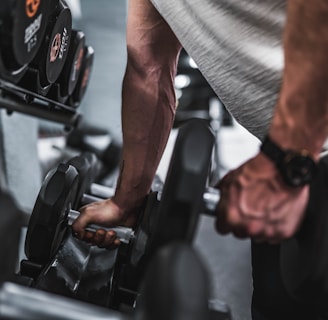
Does Strength Training Really Work? What the Largest Study in the World Reveals in 2026
Throughout my years working as a Physical Education professional specialized in Exercise Physiology, one of the most common questions I hear is:
"Do I really need a gym to get results, or does any weight training work?"
For a long time, the answer was: it depends.
But now, I have a much clearer answer — and it comes from one of the most important scientific documents ever published on the subject.
In 2026, the American College of Sports Medicine (ACSM) released its new official Position Stand on resistance training.
This was not just another study.
It analyzed 137 systematic reviews involving more than 30,000 participants — making it the largest evidence synthesis in the history of strength training science.
In this article, I’ll break down what this research actually proves, what has changed, and how you can apply it immediately.
Why This Study Matters
The previous ACSM guideline was published in 2009.
That means for 17 years, recommendations were based on outdated science.
Since then, over 30,000 new studies have been published.
This update changes everything.
Proven: Strength Training Works
The conclusion is clear:
Strength training significantly improves:
Muscle strength
Muscle size (hypertrophy)
Power
Endurance
Balance
Walking speed
Overall physical function
But it goes beyond aesthetics.
It also reduces:
Cardiovascular disease risk
Diabetes
Cancer risk
Depression symptoms
What Actually Builds Strength
Science confirmed:
Frequency: Train each muscle group at least 2x/week
Load: Heavier loads = more strength gains
Range of motion: Full range is essential
Volume: 2–3 sets already produce results
Exercise order: Prioritize what matters first
Muscle Growth: The Big Surprise
This is where most people get it wrong.
👉 Load is NOT the main factor for hypertrophy
Both:
30% of 1RM
80%+ of 1RM
Can produce similar muscle growth — IF volume is equal.
What really matters:
Weekly volume: 10–20 sets per muscle
Controlled eccentric phase
What DOESN’T Matter (And This Changes Everything)
❌ Training to failure
Not necessary.
Stopping 2–3 reps before failure gives the same results.
❌ Machines vs free weights
No difference in results.
Choose what you can stick to.
❌ Unstable surfaces
No strength advantage.
❌ Time under tension tricks
Minimal impact.
❌ Complex periodization
Not superior to simple progressive training.
Cardio and Performance
Moderate loads (30–70%) with speed focus improve power
Circuit training works
Home workouts work
Resistance bands work
👉 The best training is the one you can maintain consistently.
The Core Principle: Progressive Overload
The ACSM makes one thing very clear:
Progressive resistance training is essential.
That means:
Increase load
Increase volume
Improve execution
Over time.
My Professional Recommendation
Based on science and practice:
Train 2–3x per week
Cover all major muscle groups
2–3 sets per exercise
8–15 reps
Stop before failure
Focus on technique
Progress weekly
Who Should Train?
Everyone.
The study showed:
Safe for all ages
Even safer than some cardio
Essential for longevity
Conclusion
You don’t need:
Fancy programs
Expensive equipment
Extreme methods
You need:
👉 Consistency
👉 Progressive overload
👉 Good technique
The simple, well-executed approach always wins.
Read Also
Author
André Santos
Physical Education professional specialized in Exercise Physiology.
© 2025. All rights reserved.